Ride-Sharing Platform White-Label with Full Admin Control, Driver Apps & Real-Time Tracking - Book a Demo to Launch Faster
- Chen Yu-chen
- Dec 15, 2025
- 4 min read

Updated: Dec 19, 2025
Building a ride-sharing or carpool business, well, the idea of it seems excellent, but behind the scenes, it's not that easy. There's no more room for manual operations to survive and compete in the market; now they need automation, and that isn't just about "having an app." The real challenge is running daily operations: onboarding drivers, managing pricing, handling bookings, tracking trips in real time, resolving support issues, and keeping everything under control as you scale city by city. That's why modern operators are shifting toward white-label ride-sharing platforms that offer complete admin control, dedicated driver apps, and real-time tracking, enabling you to launch quickly without sacrificing flexibility.
Whether your focus is employee commute programs, community carpooling, campus mobility, or a whole rideshare operation, the right platform gives you a strong foundation and the ability to customize what matters.
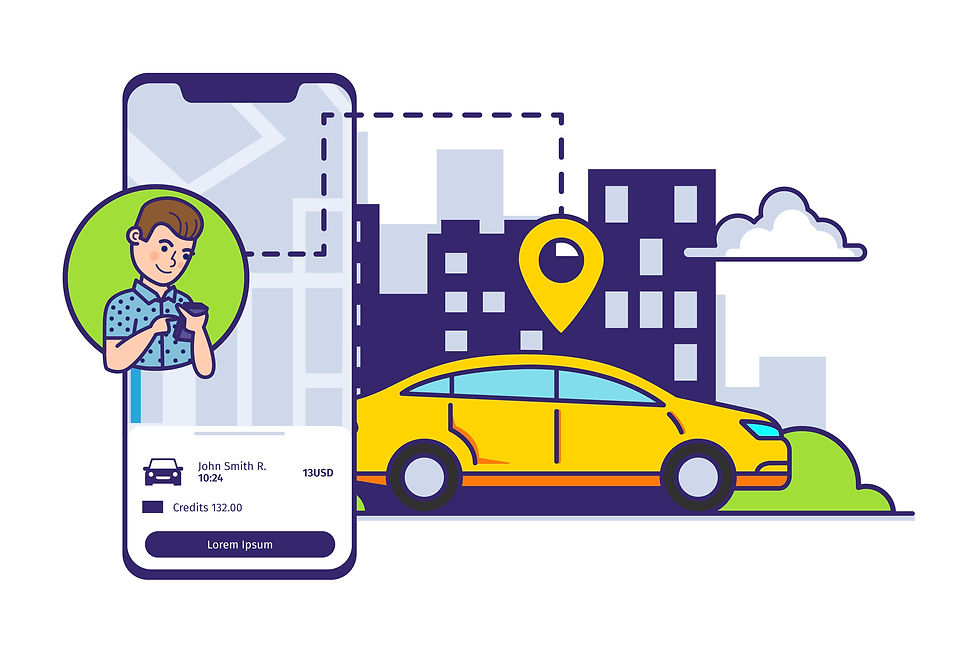
What “white-label” really means for a rideshare or carpool business
A white-label solution is a ready platform you can brand as your own-your name, your colors, your user experience-without starting from zero. The key benefit is speed: instead of spending months building core features, you start with a proven base and customize for your local workflow, region rules, and business model.
This matters especially in carpool and ride-sharing markets where timing is everything. If you can launch faster, you can test demand, sign partners, onboard supply, and iterate before competitors catch up.
Full admin control: the difference between “an app” and “a business.”
Most platforms look good on the surface-until you need day-to-day operational power. A proper carpool administration system (admin panel + ops tools) should let you control the business in real time:
User & Driver Management: approvals, document verification, suspensions, ratings, and audit logs
Service Areas & Zones: city setup, geo-fencing, restricted areas, pickup/drop rules
Pricing & Commission Controls: base fares, per-km/per-minute, surge rules, minimum fare, driver commission, promos
Booking Oversight: manual assignment, reassignments, cancellations, disputes, refunds, trip history
Support & Safety Tools: SOS workflow, incident reporting, customer support ticketing, internal notes
Analytics & Reports: supply/demand trends, conversion funnels, cancellations, peak times, revenue dashboards
This is what separates basic “carpool app software” from a platform that can actually run operations at scale.
Driver apps that keep supply consistent
Your driver experience determines whether the supply stays online. A strong white-label setup includes a dedicated driver app built for reliability:
Instant job alerts with accept/reject timers
Navigation + route optimization (pickup and drop with live map)
Trip state flow (arrived → started → completed) with clear UI
Earnings & payout visibility (even if your model is cashless or hybrid)
Document upload & verification status
In-app chat/call masking (optional, depending on your compliance needs)
Driver availability controls (online/offline, shift rules for fleets)
For fleet operators, shift scheduling and driver rostering become even more important, especially in corporate carpool deployments.
The whole Details: Carpool App Development Company
Real-time tracking: not a “nice to have” anymore
Real-time trip tracking isn’t only for the rider map. It affects operations, customer support, and trust. A modern rideshare platform should support:
Live driver location updates with smart throttling (battery + network friendly)
Route visualization and ETA accuracy
Trip event timeline (accepted, arriving, started, completed)
Admin map view for dispatch and intervention
Replay/audit for disputes (where allowed)
When real-time tracking is done right, it reduces “where is my ride?” tickets, improves rider confidence, and speeds up ops teams.
Carpool booking software vs ride-hailing: choose the model, not just the UI
Many businesses mix carpooling and rideshare features, but the logic is different.
Carpooling often needs:
Seat-based bookings (1-4 seats)
Fixed or semi-fixed routes
Scheduled departures
Matching logic (home/work clusters, preferred pickup points)
Cost-sharing rules and wallet handling
Ride-hailing typically needs:
On-demand dispatch
Dynamic pricing and supply balancing
High-frequency trip lifecycle events
A scalable platform supports both models with configuration, so you can start with one and expand without rebuilding.
“Open source carpooling software” vs white-label platforms: what’s best?
Many founders search for carpooling open source software because it sounds affordable and flexible. Open source can be helpful if you have a strong engineering team ready to maintain infrastructure, security patches, performance tuning, feature upgrades, and app store releases.
But here’s the trade-off: open source is rarely “plug and play.” You’ll spend time on:
Hardening security and auth
Building admin controls
Handling payments, notifications, maps, and tracking
Server scaling and monitoring
Compliance and support tooling
A white-label solution is often the better choice when your goal is to launch quickly, validate operations, and scale, while still keeping room for customization.
What to expect from a ride-sharing app development company (without lock-in headaches)
If you’re evaluating a ride-sharing app development company, don’t just ask, “Can you build it?” Ask how they deliver a platform that remains stable and extendable:
Modular features you can enable/disable per city/client
API-first architecture for integrations (CRM, ERP, fleet systems, HR platforms)
Clean role-based access control in admin
Release management strategy (bugfixes vs custom changes)
Clear ownership model for branding, app store accounts, and deployments
The goal is not a one-time build. The goal is a product you can run, improve, and expand.
White label rideshare app use cases that launch fast
A strong platform is not limited to one niche. Common deployments include:
Communities & gated societies (verified users, fixed areas)
Universities & campuses (safe rides, controlled zones)
Taxi + scheduled rides (hybrid operations)
Event transport (temporary high-volume booking control)
With the proper configuration, you can deploy multiple brands across different markets using the same core system.
Book a demo to launch faster (and see your exact workflow)
If you’re serious about launching a branded ride-sharing or carpool service, don’t start with a vague feature list. Start by seeing how the platform handles your real operations: driver onboarding, admin controls, trip tracking, pricing, booking flows, and edge cases like cancellations and disputes.
Book a demo, and you’ll be able to evaluate:
How quickly can you go live with your branding
Whether the admin panel gives you full operational control
How real-time tracking behaves in real networks
How the driver and rider apps handle the full trip lifecycle
What customizations are needed for your market and business rules
Also want to understand Shuttle Software at first sight: A Complete Guide for Modern Shuttle Operators


Comments